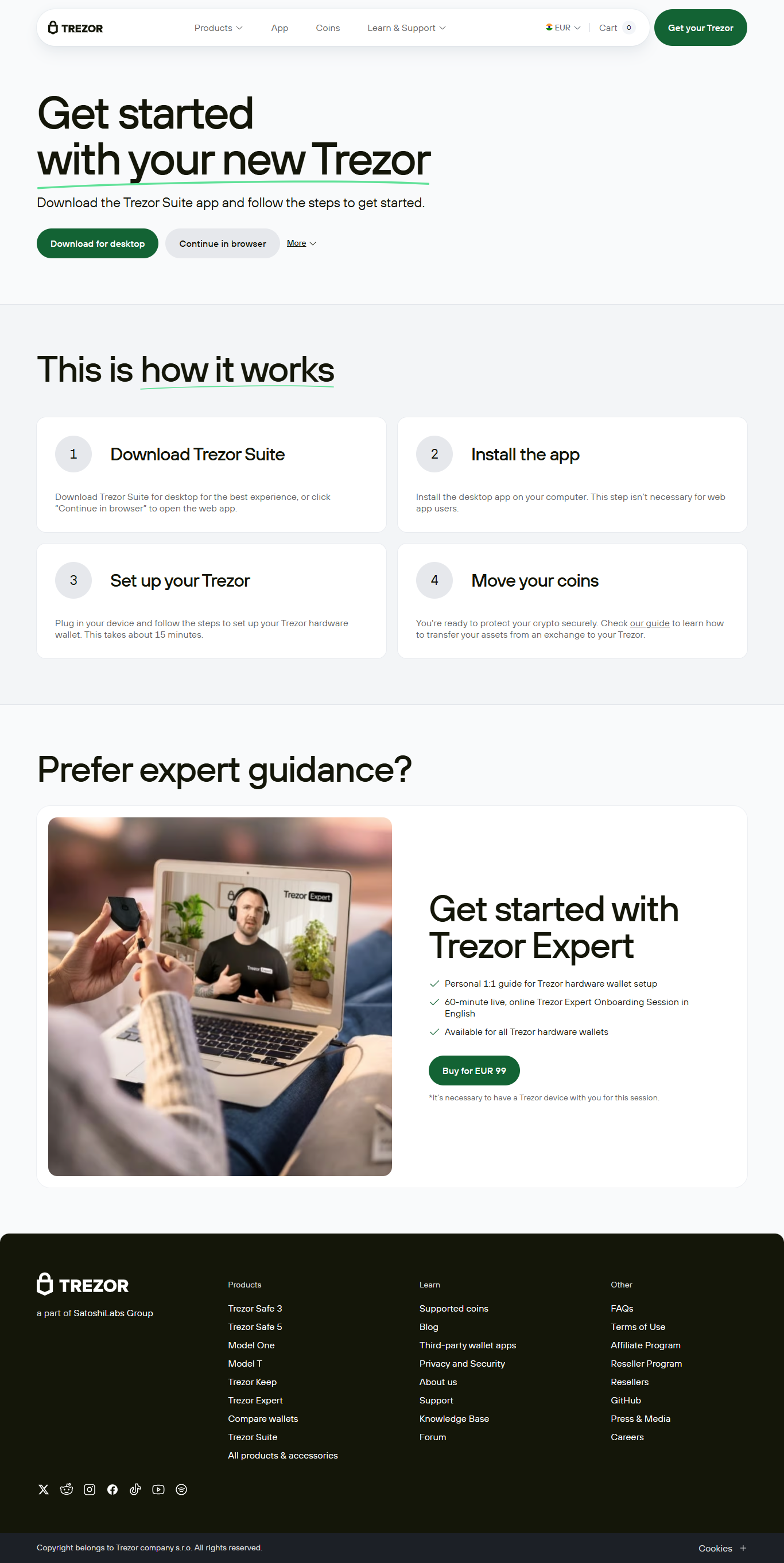
The Trezor Login process is designed to help users securely access their cryptocurrency portfolios through a trusted hardware device. Unlike online wallets that store private keys on internet-connected systems, Trezor stores your keys inside a secure, offline environment. This makes logging in not only simple but also far safer than traditional password-based platforms. In this guide, you’ll learn everything you need to know about logging into Trezor, including preparation steps, security tips, and solutions to common issues.
Trezor Login is the method you use to verify your identity when connecting your Trezor device to Trezor Suite. Instead of relying on a login ID or password, the entire authentication process happens with the help of a physical hardware wallet. Your device generates unique verification codes that ensure no one else can access your assets without having your Trezor in hand.
Logging into your Trezor wallet is straightforward, but each step has an important role in protecting your funds. Whether you use Trezor Suite on your desktop or the supported browser interface, the login flow remains consistent.
Once authenticated, you’ll gain full access to your dashboard, connected accounts, and asset management tools.
Trezor’s login system is built on a “zero trust” principle, meaning it treats all online platforms as potentially unsafe. Rather than exposing your private keys during login, Trezor forces all sensitive operations to be confirmed physically on the device. This prevents phishing attacks, remote hacks, and unauthorized logins even if your computer is compromised.
Once you complete the Trezor Login process, the Trezor Suite becomes your command center for everything related to your digital assets. The interface is modern, easy to navigate, and optimized for both new and experienced crypto users. Inside the suite, you can:
All sensitive operations require physical confirmation on the device, adding another layer of protection to your online activities.
If you are brand new to Trezor, you’ll need to set up your device before logging in for the first time. This includes installing firmware, initializing your wallet, and backing up your recovery seed. The recovery seed is a list of words that act as a complete backup of your wallet, allowing you to recover the entire device if it’s lost or damaged.
Be sure to store the seed offline, on paper or a metal backup plate. Never take photos of it or store it digitally.
Most users experience quick and trouble-free logins, but occasional technical issues can arise. Here are the most common login problems and the quickest solutions:
Trezor’s official support team and help center also offer detailed troubleshooting steps for more complex issues.
Using a secure device is only part of the equation—your habits matter, too. To keep your assets safe, follow these recommended security practices:
The Trezor Login process is built around strong security, ease of use, and complete user control. By combining a physical device with advanced digital protections, Trezor gives crypto holders a reliable and safe way to manage their assets. Once you understand how the login system works and follow recommended safety steps, you can confidently manage your cryptocurrency with minimal risk. Whether you’re a long-time investor or just getting started, Trezor offers a secure foundation for protecting your digital wealth.